Jormorbi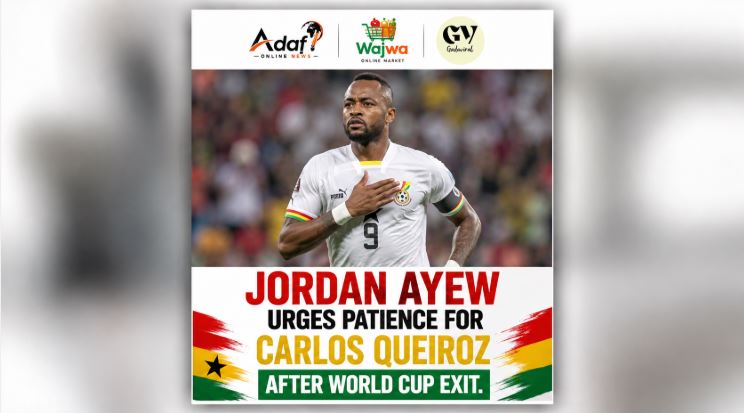
Accra, Ghana – In the wake of Ghana’s recent departure from the global football showpiece, a critical voice has emerged from within the Black Stars camp, advocating for stability amidst the perennial calls for change. Jordan Ayew, the seasoned forward and influential captain of the national team, has appealed to the fervent Ghanaian football populace to exercise restraint and allow head coach Carlos Queiroz sufficient time to implement his vision and steer the team towards future success.
Ayew’s plea arrives at a familiar juncture in Ghanaian football history: a moment of national introspection following a significant tournament, invariably accompanied by intense public scrutiny and a clamour for immediate overhauls. The Black Stars’ journey in the recent competition, while showing flashes of promise and individual brilliance, ultimately fell short of the nation’s lofty expectations. This outcome has, predictably, ignited spirited debates across various platforms, with many demanding swift and decisive action regarding the team’s technical leadership. Yet, Ayew’s intervention suggests a counter-narrative, one that prioritizes strategic continuity over knee-jerk reactions.
Ghanaian football has long been characterized by a cyclical pattern of high hopes, followed by periods of disillusionment, often culminating in the abrupt dismissal of coaching staff. The nation’s premier football institution, the Ghana Football Association (GFA), has, over the decades, cultivated a reputation for its swift resort to managerial changes, frequently disrupting long-term development plans. This ‘revolving door’ approach to coaching has seen a multitude of tacticians – both local and international – come and go, each tasked with the seemingly impossible mission of instantly transforming the Black Stars into world-beaters. This historical backdrop, marked by an impatience that borders on systemic, forms the complex terrain into which Ayew’s call for patience has landed.
Carlos Queiroz, with his extensive international experience and tactical acumen, represents a particular type of managerial appointment – one expected to bring a disciplined, structured approach to the Black Stars. His tenure, though still in its nascent stages, has been subject to the same rigorous and often unforgiving scrutiny that defines the Ghanaian football landscape. Ayew’s endorsement, therefore, carries significant weight. It suggests an internal belief in Queiroz’s capabilities and a recognition among the players that a constant flux in leadership impedes genuine progress. The captain’s message underscores the fundamental truth that team building, tactical cohesion, and the cultivation of a winning mentality are not overnight phenomena but require sustained effort and a stable environment.
The structural issues contributing to this instability run deep. They involve not only the immediate results on the pitch but also the broader governance of the sport, the influence of passionate but sometimes impulsive fan bases, and the relentless pressure from media outlets. The financial implications of constantly hiring and firing coaches are substantial, diverting resources that could otherwise be invested in grassroots development, infrastructure, or player welfare. More critically, the absence of a consistent footballing philosophy trickles down to youth development programs, where young talents are often exposed to disparate coaching methodologies, hindering their holistic growth and integration into the national team structure.
From a long-term public impact perspective, a sustained period of stability under a chosen technical direction could profoundly reshape the national team’s trajectory. It could foster a deeper connection between the team and its supporters, rebuilding trust and rekindling the unwavering national pride that often wavers with fluctuating results. A coherent strategy, allowed to mature, would enable the identification and nurturing of a core squad, developing synergy and understanding that transcend individual talent. Conversely, continued instability risks alienating fans, diminishing the commercial appeal of the Black Stars, and eroding the foundational belief necessary for sustained success on the global stage. It is a choice between chasing immediate gratification and investing in a resilient, future-proof national team.
Jordan Ayew’s appeal for patience transcends mere support for a coach; it is a profound call for a fundamental shift in mindset within Ghanaian football. It highlights the imperative for strategic continuity, stressing that genuine progress is often a marathon, not a sprint. For the Black Stars to truly ascend and consistently compete at the highest echelons of international football, the nation, from the corridors of power to the passionate fan on the street, must embrace the virtues of patience and allow a sustained vision to take root and flourish. Only then can the cyclical disappointments be broken, paving the way for enduring glory.