Tackle the abnormal transport fare charges by some commercial drivers – COFIIG-Ghana tells Transport Minister
 Jormorbi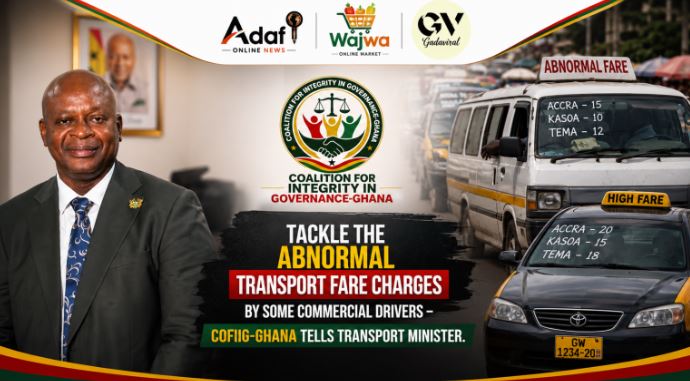
Accra’s bustling streets, the lifeblood of Ghana’s economic activity, are increasingly becoming a battleground for commuters grappling with exorbitant and often arbitrary transport fares. Amidst a landscape of economic strain, a significant voice has emerged, urging immediate intervention from the nation’s highest transport authority. The Coalition of Concerned Citizens of Ghana (COFIIG-Ghana) has issued a direct and unequivocal call to the Transport Minister, Joseph Nikpe, demanding decisive action against commercial drivers who are levying what many describe as abnormal and exploitative charges, particularly during the demanding peak hours.
The gravity of the situation was underscored by Assembly Member Simon Yaw Awadzi, whose impassioned appeal to the Minister highlighted a distressing trend: transport fares on specific routes within the capital have surged by as much as 300% during rush periods. This alarming increase, far exceeding any officially sanctioned adjustments, places an unbearable burden on the ordinary Ghanaian, eroding disposable incomes and deepening the daily struggle for survival in an already challenging economic climate.
Ghana’s urban transport system, particularly in major hubs like Accra, operates within a framework designed to ensure fair pricing. Official transport fares are typically negotiated and agreed upon by various stakeholders, including the Ministry of Transport, transport unions, and passenger associations. These tariffs are meant to provide a predictable and stable cost for commuters, while also ensuring commercial drivers can sustain their operations. However, the reality on the ground often diverges sharply from this ideal. During periods of high demand, such as morning and evening rush hours, or when adverse weather conditions prevail, a significant number of commercial drivers unilaterally inflate fares, turning essential services into opportunistic ventures.
This practice is not merely an inconvenience; it represents a systemic exploitation of commuters’ vulnerability. Passengers, often racing against time to reach their workplaces or return home after a long day, find themselves with little recourse but to pay the inflated rates. The alternative – being stranded or facing disciplinary action for tardiness – is often not an option. This imbalance of power fosters a climate of frustration and resentment, undermining the social contract between service providers and the public they serve.
The roots of this perennial problem are multi-faceted. On one hand, commercial drivers often cite rising operational costs, primarily fuel prices, vehicle maintenance, and the daily ‘sales’ targets imposed by vehicle owners, as justification for their actions. Without a robust regulatory mechanism to ensure that official fare adjustments genuinely reflect these fluctuating costs, some drivers resort to unofficial surcharges. On the other hand, a perceived lack of effective enforcement by regulatory bodies creates an environment where such exploitative practices can flourish with impunity. The fragmented nature of the transport sector, coupled with the sheer volume of daily commutes, makes consistent monitoring and enforcement a daunting task.
The long-term public impacts of such unchecked fare hikes are profound and far-reaching. Economically, they act as a regressive tax on the urban poor and lower-middle class, who rely heavily on public transport. The significant portion of their income diverted to inflated fares means less money available for food, education, healthcare, and savings. This contributes to a cycle of poverty and makes upward mobility even more challenging. Businesses also suffer, as employees face increased stress and potential delays, impacting productivity and the overall efficiency of the workforce.
Socially, the constant struggle with exorbitant fares breeds widespread disillusionment and distrust in public institutions. When citizens perceive that essential services are not regulated effectively, and that they are left to the mercy of arbitrary price gouging, their faith in governance wanes. This can exacerbate social inequalities, as those with limited financial means are disproportionately affected, potentially leading to increased social unrest and a breakdown in civic order. Furthermore, it could push more individuals towards informal, unregulated transport options, which often come with their own set of safety and reliability concerns.
For the nation’s urban planning and development, the implications are equally critical. Unpredictable and unaffordable transport costs influence where people choose to live and work. It can lead to further decentralization and sprawl, as individuals seek more affordable housing on the city’s periphery, only to face even higher transport costs and longer commute times. This creates a vicious cycle, further burdening the existing infrastructure and negating efforts towards sustainable urban growth.
COFIIG-Ghana’s emphatic demand for the Transport Minister to address these abnormal charges is a critical call to restore order and fairness to Ghana’s urban transport system. It necessitates a multi-pronged approach: strengthening regulatory oversight, ensuring transparent and timely adjustments to official fares that reflect economic realities, and initiating sustained public awareness campaigns to educate both drivers and passengers about their rights and responsibilities. Furthermore, collaborative dialogue between government, transport unions, and civil society organizations is crucial to foster a sense of shared responsibility and find sustainable solutions that balance the needs of both service providers and commuters.
Ultimately, the ability of Ghanaians to move freely, affordably, and predictably across their cities is not just a matter of convenience; it is fundamental to economic participation, social equity, and the overall well-being of the nation. Minister Nikpe’s decisive intervention is not merely anticipated but is an imperative for ensuring that public transport remains a lifeline, not a burden, for the millions who depend on it daily. The time for a comprehensive strategy to curb these exploitative practices is now, to safeguard the financial stability and peace of mind of every Ghanaian commuter and uphold the integrity of the nation’s public services.