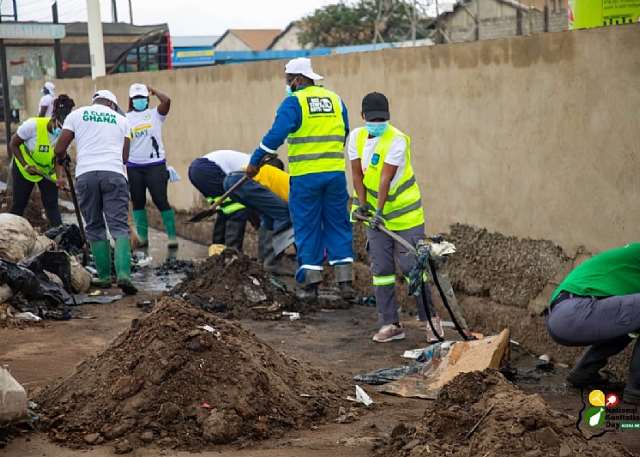
We will no longer tolerate the use of the space under the interchange for commercial activities – AMA
 Jormorbi
Accra’s urban landscape is often defined by a dynamic interplay of formal infrastructure and informal commerce, a delicate balance frequently tipped by the exigencies of daily survival. However, the Accra Metropolitan Assembly (AMA) has issued an unequivocal declaration, signaling an end to what it terms the persistent encroachment of public spaces, particularly beneath the city’s vital interchanges, for illicit commercial activities. This decisive stance marks a renewed commitment to restoring order, enhancing public safety, and reclaiming critical infrastructure from unauthorized use.
The directive from the city’s highest administrative body is stark: any individual found engaged in selling, hawking, or any other form of unsanctioned economic pursuit beneath the sprawling concrete arteries that connect Accra will face the full force of the law. This stern warning is not merely an advisory; it underscores an invigorated resolve by the AMA to enforce existing bylaws that have, for various reasons, seen intermittent application over the years. The implications for the thousands whose livelihoods depend on these informal arrangements are profound, prompting questions about the long-term sustainability of urban planning and socio-economic integration.
For years, the spaces under interchanges – structures like the iconic Kwame Nkrumah Interchange, the bustling Obetsebi Lamptey Interchange, and the busy Kaneshie Interchange – have transformed into impromptu markets. Driven by a complex mix of economic necessity, convenience for commuters, and a perceived lack of alternative formal trading spaces, these areas have become hubs of activity. From street food vendors to hawkers of assorted goods, these individuals have carved out a precarious existence, serving a ready market while inadvertently contributing to a host of urban challenges. The structural deep background reveals that this phenomenon is not unique to Accra but is a pervasive feature in many rapidly urbanizing African cities, where informal economies thrive amidst formal planning deficits.
However, the proliferation of commercial activities in these sensitive zones carries significant risks. Traffic congestion, already a perennial headache for Accra residents, is exacerbated by pedestrian crossings and haphazard vehicle parking associated with these informal markets. More critically, the presence of numerous vendors and their makeshift stalls can compromise public safety. Pedestrians navigating these spaces often contend with moving traffic, increasing the likelihood of accidents. Furthermore, sanitation concerns are paramount; the accumulation of refuse from food vendors and other traders poses environmental and public health risks, undermining the city’s broader sanitation efforts. There are also structural integrity concerns, as unregulated activities can sometimes lead to damage or neglect of the very infrastructure they operate beneath, not to mention the potential for increased crime and security vulnerabilities in poorly lit, unregulated environments.
By taking this firm stand, the AMA aims to address these multifaceted challenges comprehensively. The long-term public impacts of a successful enforcement drive could be transformative. Accra could see improved traffic flow, enhancing productivity and reducing commute times for millions. The aesthetic appeal and safety of public spaces would be significantly bolstered, contributing to a more organized and livable city. Moreover, a more ordered environment under critical infrastructure could reduce maintenance costs and prolong the lifespan of these essential structures, which are vital for the city’s economic circulatory system. This enforcement also sends a clear message about respect for public property and the rule of law, fostering a culture of compliance that is essential for sustainable urban development.
Yet, the social and economic ramifications for the displaced informal traders cannot be overlooked. While the AMA’s intent is to bring order, there is an imperative to consider the human cost. Without viable alternatives, many vendors face a sudden loss of income, potentially pushing already vulnerable populations deeper into hardship. A truly comprehensive solution would ideally involve not just punitive measures but also proactive steps to integrate these traders into the formal economy, perhaps through designated market spaces, training programs, or accessible micro-financing initiatives. The challenge for the AMA, therefore, extends beyond mere enforcement to the creation of an inclusive urban environment where economic opportunities are structured and regulated, rather than simply displaced.
In conclusion, the Accra Metropolitan Assembly’s resolute declaration against commercial activities beneath the city’s interchanges marks a pivotal moment in the ongoing battle for urban order and public safety. This decisive move is a testament to the city’s commitment to reclaiming its vital infrastructure from informal encroachment, promising improved traffic management, enhanced safety, and better sanitation for all citizens. While the immediate enforcement may present significant challenges for the informal sector, the long-term vision is clear: to foster a more organized, efficient, and ultimately safer Accra where public spaces serve their intended purpose for the benefit of all residents. The success of this initiative will hinge not only on consistent enforcement but also on the strategic development of sustainable alternatives that address the underlying socio-economic drivers of informal trade, ensuring a balanced and progressive urban transformation.